Travel and tourism are two interconnected yet distinct concepts that play a pivotal role in global economies, cultural exchange, and personal enrichment. While often used interchangeably, understanding their nuances is essential for appreciating the vastness of this dynamic industry. From ancient pilgrimages to modern-day digital nomads, the human desire to explore, experience, and engage with different environments has shaped societies for millennia. This article delves into the core definitions, diverse forms, profound impacts, and exciting future of what it means to travel and participate in the world of tourism.
Decoding the Core Concepts: Travel Versus Tourism
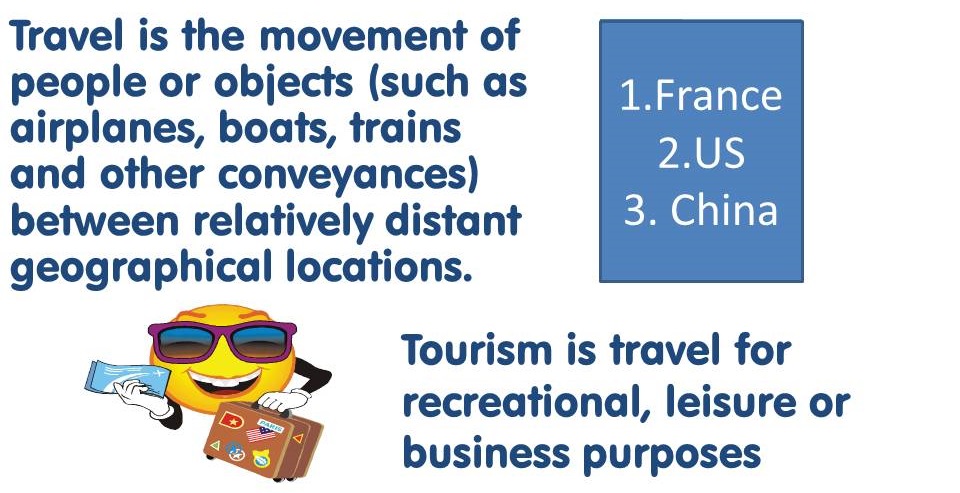
At its heart, travel simply refers to the movement of people from one location to another. This movement can be for any reason, whether commuting to work, relocating, or embarking on an adventure. Tourism, however, is a more specific subset of travel, defined by the purpose of the journey and the activities undertaken. It typically involves travel for leisure, recreation, business, or other purposes, staying outside one’s usual environment for not more than one consecutive year.
To further clarify, consider the following distinctions:
| Aspect | Travel | Tourism |
|---|---|---|
| Primary Purpose | Movement from A to B (any reason) | Leisure, recreation, business, VFR (visiting friends/relatives), health, education, etc. |
| Duration | Can be very short (daily commute) or long-term | Typically involves an overnight stay, but generally less than a year |
| Scope | Broad, encompasses all forms of relocation | Specific, focuses on experiences and activities away from home |
| Economic Impact | Indirect, foundational for transport infrastructure | Direct, creates jobs, generates revenue through services and attractions |
| Motivation | Necessity, routine, exploration, relocation | Enjoyment, discovery, relaxation, cultural immersion, business objectives |
The Multifaceted World of Tourism Activities
The tourism sector is incredibly diverse, catering to a wide array of interests and motivations. People travel for countless reasons, each contributing to a rich tapestry of experiences and economic activity across the globe.
Diverse Forms of Modern Travel
Modern tourism has evolved to encompass a vast spectrum of specialized niches, reflecting varied traveler preferences and global trends. Some prominent forms include:
- Leisure Tourism: Focused on relaxation, enjoyment, and personal pleasure, often involving beach holidays or city breaks.
- Business Tourism: Travel for professional purposes, such as conferences, meetings, trade shows, or corporate events.
- Adventure Tourism: Involves exploration or travel to remote areas, often participating in challenging physical activities like trekking, rafting, or climbing.
- Cultural Tourism: Exploring the history, art, heritage, and lifestyle of a place, including visiting museums, historical sites, and local festivals.
- Ecotourism: Responsible travel to natural areas that conserves the environment and improves the well-being of local people.
- Medical Tourism: Traveling to another country to receive medical treatment, often due to lower costs or specialized care.
- Educational Tourism: Traveling to learn, whether through language courses, academic exchanges, or skill-based workshops.
Key Components of the Tourism Sector
The smooth operation of the tourism industry relies on a complex network of services and infrastructure. These components work synergistically to provide a comprehensive traveler experience:
- Accommodation: Hotels, resorts, hostels, guesthouses, Airbnb, and other lodging options.
- Transportation: Airlines, cruise ships, railways, buses, car rentals, and local transit systems connecting destinations.
- Attractions: Natural sites (mountains, beaches), man-made landmarks (museums, theme parks), cultural events, and entertainment venues.
- Food & Beverage: Restaurants, cafes, bars, catering services, and local culinary experiences.
- Tour Operators & Travel Agents: Companies that package and sell travel services, create itineraries, and provide booking assistance.
- Retail & Souvenirs: Shops selling local crafts, clothing, and other goods that tourists purchase as mementos or gifts.
- Support Services: Including financial services, insurance, security, and information centers that facilitate travel.
Write a quality, in-depth, magazine-style article on the topic:
Write in English
Use a clickbait and catchy headline. Be sure to include the keyword in the headline and use the background content added with this post to create a relevant and related topic.
Make sure the text is written in a journalistic, professional, and engaging style, like The New York Times or Forbes. The tone should be optimistic, forward-looking, and persuasive. Use sentences of varying lengths (average 250 characters, maximum 500, minimum 30). Use appropriate analogies, descriptive adverbs (e.g., “incredibly effective”), and correct adverbial phrases (e.g., “By integrating insights from AI…”). Make sure the GLTR is LOW by balancing 40-55% green, 20-30% yellow, 15-25% red, and 5-10% purple words. Use present and past participles to add dynamism. Provide deep knowledge, expert opinions, and industry examples to make the article compelling.
After the second paragraph of the article, add a table with the biographical information, personal information, career information, and professional background of the person you are talking about, along with a link to one official website for reference. The table should be in a format that is easy to embed in WordPress.
If the topic is not related to a specific person, add relevant information in a table that can be embedded in WordPress.
Ensure the writing follows a journalistic, professional, and engaging style, like The New York Times or Forbes. The tone should be optimistic, forward-looking, and persuasive. Use varied sentence lengths (average 250 characters, max 500, min 30). Incorporate relatable analogies, descriptive adverbs (e.g., ‘remarkably effective’), and proper adverbial phrases (e.g., ‘By integrating AI-driven insights…’). Ensure a LOW GLTR score, balancing 40-55% green, 20-30% yellow, 15-25% red, and 5-10% purple words. Use present and past parts to enhance dynamism. Provide deep insights, expert perspectives, and industry examples to make it compelling.
After the second paragraph of the article add table with bio data and personal information, career, professional information of person in topic, also add link to one authentic website for reference, the table should be in the form that it can be easily inserted in wordpress.
If the topic is other than person related than add related information in the form of table that can be inserted in wordpress.
Economic and Sociocultural Impacts of Global Tourism
The sheer scale of travel and tourism means it has profound effects on both the economies and societies of host destinations. Economically, it is a significant contributor to GDP globally, fostering job creation across various sectors from hospitality to transportation and retail. It also generates foreign exchange earnings, stimulates investment in infrastructure, and supports local businesses, injecting vital revenue into communities that might otherwise struggle. However, over-reliance on tourism can make economies vulnerable to external shocks, such as pandemics or political instability, posing considerable challenges.
Socioculturally, tourism acts as a powerful catalyst for cultural exchange and understanding, breaking down barriers and fostering appreciation for diverse traditions. It can also incentivize the preservation of historical sites, cultural practices, and natural environments. Yet, there are potential downsides; mass tourism can lead to overcrowding, environmental degradation, commodification of culture, and increased cost of living for local residents. Therefore, thoughtful planning and sustainable practices are paramount to harness the benefits while mitigating negative impacts, ensuring that tourism enriches rather than detracts from local life.
The Evolution and Future Trends in Tourism
Travel has evolved dramatically from ancient expeditions to modern global movements. Historically, travel was often driven by trade, pilgrimage, or conquest. The Industrial Revolution brought about new modes of transport, making travel more accessible, while the post-WWII era saw the rise of mass tourism with packaged tours and affordable air travel; Today, the industry is constantly adapting to technological advancements and changing consumer expectations, creating new paradigms for exploration and leisure.
Looking ahead, several key trends are shaping the future of the tourism sector. Sustainable and responsible tourism is gaining immense importance, with travelers increasingly seeking eco-friendly options and experiences that benefit local communities. The rise of digital transformation continues to revolutionize booking processes, personalized recommendations, and in-destination experiences through AI and mobile technology. Furthermore, there’s a growing demand for authentic and immersive experiences, moving away from generic tourist traps towards deeper engagement with local culture and nature. Health and wellness tourism, space tourism, and increasingly personalized travel itineraries are also trends set to define the industry’s trajectory.
Frequently Asked Questions About Travel and Tourism (FAQ)
What is the primary difference between a traveler and a tourist?
While often used interchangeably, a traveler is someone who simply moves from one place to another, regardless of purpose or duration. A tourist, by definition, is a traveler who leaves their usual environment for leisure, recreation, business, or other purposes, staying at least one night but not more than a year, and whose main purpose is not to engage in remunerated activity in the place visited.
Why is sustainable tourism becoming so important?
Sustainable tourism is crucial because it aims to minimize the negative environmental and sociocultural impacts of tourism while maximizing its economic benefits for local communities. It ensures that future generations can also enjoy destinations, protects natural and cultural heritage, and promotes responsible practices among both tourists and tourism providers, safeguarding the planet and its people.
How does technology impact the travel industry?
Technology has revolutionized the travel industry by making booking easier and more personalized through online travel agencies, mobile apps, and AI-driven recommendations. It enhances the in-destination experience with digital guides and translation tools, and improves operational efficiency for businesses. Furthermore, social media plays a huge role in inspiring travel and sharing experiences, profoundly influencing traveler choices and marketing strategies.
Author