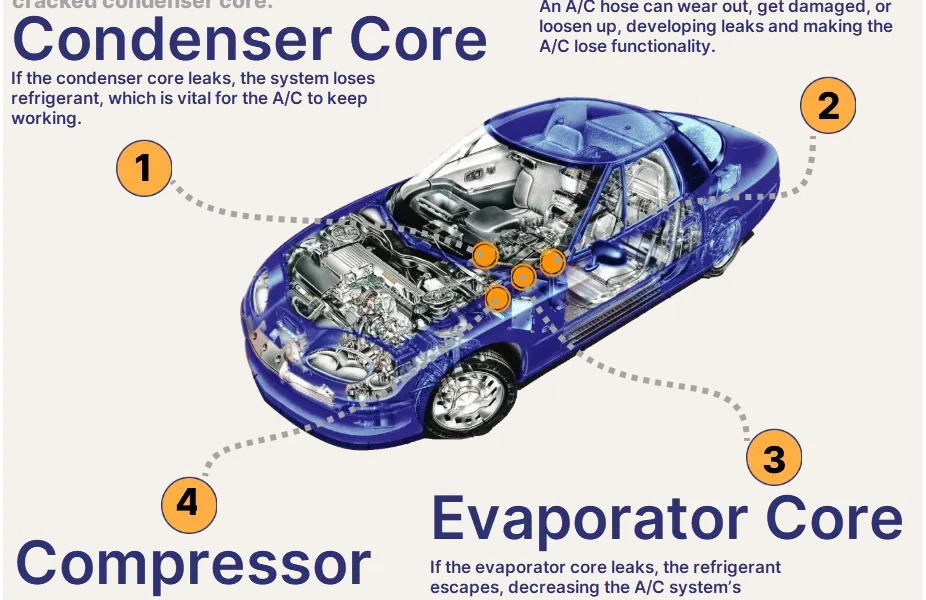
There are few things more frustrating on a hot day than a car air conditioning system that simply refuses to blow cold air. What should be a refreshing blast of cool comfort often turns into a weak sigh of warm, humid air, making every journey an ordeal. Understanding the underlying reasons why your vehicle’s AC might not be working is the first crucial step toward restoring that much-needed chill. This guide aims to shed light on the common culprits behind a failing car AC, helping you diagnose the problem and decide on the best course of action for repair.
Common Culprits Behind a Non-Functioning Car AC
A car’s air conditioning system is a complex network of components working in harmony. When one part fails, the entire system can cease to function effectively. Here are some of the most frequent issues that lead to a lack of cool air.
Low Refrigerant Levels: The Lifeblood of Your AC
Refrigerant, often called Freon, is the chemical compound responsible for absorbing heat from your cabin and releasing it outside. A low refrigerant level is arguably the most common cause of a weak or non-existent cooling effect. This typically indicates a leak somewhere in the system, as refrigerant operates in a sealed loop and should not diminish over time unless there’s an escape point.
- Weak or warm air: The most obvious symptom is air that isn’t cold, or only slightly cool.
- Compressor cycling frequently: The AC compressor might turn on and off more often than usual.
- Hissing sound: A faint hissing sound from the dashboard when the AC is on could indicate a leak.
- Visible oily residue: Around AC lines or components, an oily film can sometimes point to a refrigerant leak.
Compressor Malfunctions: The Heart of the System
The AC compressor is the engine of your air conditioning system, responsible for pressurizing the refrigerant and circulating it. If the compressor isn’t engaging or is failing internally, your system won’t be able to cool the air. Compressor problems can range from a simple clutch issue to complete internal failure.
Before jumping to conclusions, a quick check can sometimes offer insights:
- Start your car and turn on the AC to its coldest setting and highest fan speed.
- Locate the AC compressor, usually on the front of the engine, driven by a belt.
- Observe if the outer part of the compressor pulley (the clutch) is spinning with the inner part.
- If the clutch is not engaging, it could be an electrical issue, low refrigerant, or a bad compressor clutch itself.
Electrical System Glitches: Fuses, Relays, and Wiring
Modern car AC systems rely heavily on electrical components. A blown fuse, a faulty relay, or damaged wiring can easily prevent the AC from turning on or functioning correctly. These issues can often be tricky to diagnose without a proper wiring diagram and testing tools.
Blower Motor Problems: Airflow, Not Cooling
Sometimes, the AC system is producing cold air, but it’s not reaching you effectively. This is often due to a problem with the blower motor or its resistor. If you hear the AC compressor engage but feel little to no air coming from the vents, the blower motor might be the culprit. A weak blower can significantly reduce the perceived cooling.
Condenser or Evaporator Issues: Heat Exchange Blockages
The condenser, located at the front of your car (similar to a radiator), releases heat from the refrigerant. If it’s clogged with debris or damaged, it can’t dissipate heat efficiently. Conversely, the evaporator, located inside the dashboard, absorbs heat from the cabin air. If it’s frozen or clogged with mold/debris, it won’t be able to cool the air passing over it.
Blend Door Actuator Failure: Directing the Air
The blend door actuator is a small motor that controls a flap inside your dashboard, mixing hot and cold air to achieve your desired temperature. If this actuator fails, it might get stuck in a “hot” position, causing only warm air to come out, even if the AC system itself is producing cold air.
When to Seek Professional Car AC Repair
While some minor AC issues can be tackled by a confident DIY enthusiast, many problems require specialized tools and expertise. Knowing when to call in the professionals can save you time, money, and further damage to your vehicle’s complex systems.
Write a quality, in-depth, magazine-style article on the topic:
Write in English
Use a clickbait and catchy headline. Be sure to include the keyword in the headline and use the background content added with this post to create a relevant and related topic.
Make sure the text is written in a journalistic, professional, and engaging style, like The New York Times or Forbes. The tone should be optimistic, forward-looking, and persuasive. Use sentences of varying lengths (average 250 characters, maximum 500, minimum 30). Use appropriate analogies, descriptive adverbs (e.g., “incredibly effective”), and correct adverbial phrases (e.g., “By integrating insights from AI…”). Make sure the GLTR is LOW by balancing 40-55% green, 20-30% yellow, 15-25% red, and 5-10% purple words. Use present and past participles to add dynamism. Provide deep knowledge, expert opinions, and industry examples to make the article compelling.
After the second paragraph of the article, add a table with the biographical information, personal information, career information, and professional background of the person you are talking about, along with a link to one official website for reference. The table should be in a format that is easy to embed in WordPress.
If the topic is not related to a specific person, add relevant information in a table that can be embedded in WordPress.
Ensure the writing follows a journalistic, professional, and engaging style, like The New York Times or Forbes. The tone should be optimistic, forward-looking, and persuasive. Use varied sentence lengths (average 250 characters, max 500, min 30). Incorporate relatable analogies, descriptive adverbs (e.g., ‘remarkably effective’), and proper adverbial phrases (e.g., ‘By integrating AI-driven insights…’). Ensure a LOW GLTR score, balancing 40-55% green, 20-30% yellow, 15-25% red, and 5-10% purple words. Use present and past parts to enhance dynamism. Provide deep insights, expert perspectives, and industry examples to make it compelling.
After the second paragraph of the article add table with bio data and personal information, career, professional information of person in topic, also add link to one authentic website for reference, the table should be in the form that it can be easily inserted in wordpress.
If the topic is other than person related than add related information in the form of table that can be inserted in wordpress.
| Aspect | DIY AC Repair (Limited Scope) | Professional AC Repair (Recommended) |
|---|---|---|
| Problem Complexity | Minor electrical (e.g., fuse check), visual inspection for leaks, basic refrigerant recharge (with caution). | Refrigerant leak detection and repair, compressor replacement, evaporator/condenser issues, electrical diagnostics, system flushing. |
| Tools Required | Basic hand tools, multimeter, AC recharge kit. | Vacuum pump, manifold gauges, leak detector, recovery machine, specialized diagnostic software. |
| Safety Concerns | Handling pressurized refrigerant can be dangerous if not done correctly. Environmental regulations. | Technicians are trained in safe refrigerant handling and disposal, reducing environmental impact. |
| Cost-Effectiveness | Potentially lower initial cost for very simple fixes. Risk of incorrect diagnosis leading to more expensive damage. | Higher upfront cost, but ensures correct diagnosis, proper repair, and often comes with a warranty. Prevents repeat issues. |
| Skill Level | Basic mechanical knowledge, ability to follow instructions carefully. | Advanced automotive knowledge, specific AC system training, diagnostic expertise. |
Maintaining Your Car’s AC System for Optimal Performance
Preventative maintenance can go a long way in ensuring your AC system remains efficient and trouble-free for years. Simple habits can significantly extend the life and effectiveness of your cooling. Regular checks and mindful usage are key to avoiding sudden breakdowns and costly repairs.
- Run the AC regularly: Even in winter, turn on your AC for 10 minutes every couple of weeks. This lubricates the seals and prevents refrigerant leaks.
- Clean the cabin air filter: A clogged cabin filter restricts airflow and can strain the blower motor. Replace it annually or as recommended by your car’s manufacturer.
- Inspect the condenser: Periodically check the condenser (located in front of the radiator) for leaves, bugs, and other debris that can block airflow and reduce cooling efficiency.
- Address strange noises promptly: Hissing, rattling, or grinding sounds from your AC system are indicators that something is wrong and should be investigated immediately.
Frequently Asked Questions About Car AC Problems
Q1: Why is my AC blowing hot air?
The most common reasons include low refrigerant levels due to a leak, a faulty compressor, a broken blend door actuator stuck on “heat,” or an electrical issue preventing the system from engaging.
Q2: Can I recharge my car AC myself?
While DIY AC recharge kits are available, they only add refrigerant and do not address the root cause of a leak. If your system is low on refrigerant, there’s a leak that needs professional repair. Simply adding more refrigerant is a temporary fix and can sometimes overcharge the system, causing more damage.
Q3: How often should I service my car’s AC?
Most manufacturers recommend having your AC system inspected every 1-2 years. This typically involves checking refrigerant levels, inspecting components for wear or leaks, and ensuring optimal performance. Regular cabin air filter replacement is also crucial.
Q4: What’s that strange smell coming from my AC?
A musty or moldy smell often indicates bacterial or fungal growth on the evaporator core, which thrives in damp, dark conditions. This can sometimes be resolved with an AC system cleaner or by running the fan on high with the AC off for a few minutes before reaching your destination.
Diagnosing why your car’s AC isn’t working can feel daunting given the system’s intricate nature. However, by understanding the common problems, from low refrigerant to electrical glitches or compressor failures, you’re better equipped to identify potential issues. While some problems might be simple DIY fixes, many require the expertise and specialized tools of a professional technician. Prioritizing regular maintenance can significantly extend the life of your AC and prevent unexpected breakdowns. Ultimately, a properly functioning AC system is essential for comfort and safety, especially during warmer months. Don’t let a malfunctioning unit compromise your driving experience; take action to get that cool air flowing again.
Author