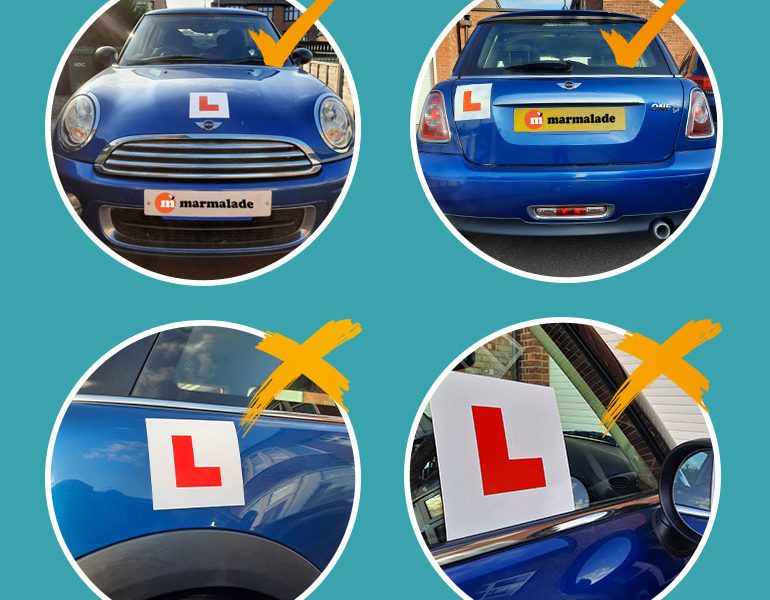
Learning to drive is an exciting milestone for many individuals, marking the beginning of newfound independence. During this crucial period, displaying L plates prominently on your vehicle is not merely a suggestion but a legal requirement in many regions. These distinctive red ‘L’ symbols on a white background serve a vital purpose: they alert other road users that the driver is a learner and might require extra consideration or exhibit less predictable actions. Proper placement ensures maximum visibility, safeguarding both the learner driver and everyone else on the road. Without correct display, you risk both fines and misunderstanding from fellow motorists.
Understanding the Importance of L Plate Visibility
L plates are more than just a symbol; they are a direct communication tool. They signal to other drivers to be patient and understanding, recognizing that the person behind the wheel is still gaining experience. This simple visual cue significantly contributes to road safety. Incorrectly placed or obscured L plates defeat this purpose entirely, potentially leading to confusion or even dangerous situations on the road. Therefore, ensuring they are clearly visible from both the front and rear of your vehicle is paramount for compliance and safety;
General Guidelines for L Plate Positioning
To ensure your L plates are effective and compliant, follow these fundamental rules:
- Front and Rear Placement: You must display one L plate on the front of your car and one on the rear. Both should be clearly visible to anyone approaching your vehicle from either direction, ensuring comprehensive warning.
- Unobscured View: Ensure the plates are not covered by anything, such as wipers, tinted windows, or car accessories. They must be visible even in adverse weather conditions, maintaining their critical role.
- Legal Size: L plates typically adhere to a standard size (e.g;, 178mm x 178mm in the UK). Always ensure yours comply with local regulations to avoid issues.
- Secure Attachment: The plates must be securely attached so they do not fall off while the vehicle is in motion. A loose plate is a hazard and an ineffective warning.
Optimal Locations for Attaching L Plates
The exact placement can vary slightly depending on your vehicle type and the design of the L plates themselves. However, some areas are universally recommended for optimal visibility and adherence to regulations. Consider these prime spots for effective display.
Front L Plate Placement Strategies
For the front of your car, consider these effective spots to ensure maximum visibility:
- Lower Windscreen (Passenger Side): This is a very common location. Place the plate on the inside of the windscreen, usually in the lower corner on the passenger side, ensuring it doesn’t obstruct the driver’s view or block any critical sensors.
- Front Grille/Bumper: Magnetic or adhesive plates can be affixed to a flat, prominent part of the front grille or bumper. Ensure it’s not too low to scrape on curbs, nor too high to be obscured by the bonnet.
- Bonnet: Less common, but some drivers place magnetic plates on the flat part of the bonnet, close to the front edge. Always ensure it’s exceptionally secure and won’t flap or detach at speed.
Rear L Plate Placement Strategies
The rear plate is equally critical for drivers following you, signaling your learner status clearly.
- Rear Window (Passenger Side): Similar to the front, the lower corner of the rear window on the passenger side is a popular and effective choice. It must not block the driver’s rear view through the mirror.
- Boot Lid/Tailgate: Many vehicles offer a flat surface on the boot lid or tailgate where magnetic or adhesive plates can be securely attached. This is often an ideal spot for maximum, unobstructed visibility to trailing vehicles.
- Rear Bumper: Like the front bumper, a flat section of the rear bumper can be used. Be mindful of exhaust heat, which could affect adhesive, or potential damage from tight parking maneuvers.
Choosing the Right Type of L Plate for Easy Placement
L plates come in various forms, each with its own advantages and recommended placement methods. Selecting the right type can significantly impact ease of use and security.
| Feature/Type | Magnetic L Plates | Adhesive L Plates | Tie-on/Suction Cup L Plates |
|---|---|---|---|
| Attachment Method | Magnets adhere to metal surfaces of the car body. | Sticky backing adheres to glass or painted surfaces. | Strings or suction cups attach to windows or frames. |
| Key Advantages | Easy to attach and remove, reusable, generally causes no damage to paintwork. | Very secure, highly weather-resistant, unlikely to fall off even at speed. | Good for non-magnetic or non-flat surfaces, can be reusable if cared for. |
| Potential Disadvantages | Only for metal surfaces, can be stolen, may scratch paint if dirt is trapped underneath. | Can leave residue upon removal, often single-use, harder to reposition once applied. | May slightly block window view, suction cups can fail in extreme temperatures, less secure than adhesive. |
| Ideal Use Case | Shared vehicles, temporary use, or when frequently switching between cars. | More permanent display, specific vehicle, or for maximum security. | Vehicles with limited magnetic or flat surfaces, or for interior window display. |
| Recommended Placement | Metal parts of bodywork (boot lid, bonnet, side doors, bumpers); | Windows (inside or outside), smooth painted bodywork panels. | Inside windows (suction), exterior (tie-on via eyelets or vents). |
Write a quality, in-depth, magazine-style article on the topic:
Write in English
Use a clickbait and catchy headline. Be sure to include the keyword in the headline and use the background content added with this post to create a relevant and related topic.
Make sure the text is written in a journalistic, professional, and engaging style, like The New York Times or Forbes. The tone should be optimistic, forward-looking, and persuasive. Use sentences of varying lengths (average 250 characters, maximum 500, minimum 30). Use appropriate analogies, descriptive adverbs (e.g., “incredibly effective”), and correct adverbial phrases (e.g., “By integrating insights from AI…”). Make sure the GLTR is LOW by balancing 40-55% green, 20-30% yellow, 15-25% red, and 5-10% purple words. Use present and past participles to add dynamism. Provide deep knowledge, expert opinions, and industry examples to make the article compelling.
After the second paragraph of the article, add a table with the biographical information, personal information, career information, and professional background of the person you are talking about, along with a link to one official website for reference. The table should be in a format that is easy to embed in WordPress.
If the topic is not related to a specific person, add relevant information in a table that can be embedded in WordPress.
Ensure the writing follows a journalistic, professional, and engaging style, like The New York Times or Forbes. The tone should be optimistic, forward-looking, and persuasive. Use varied sentence lengths (average 250 characters, max 500, min 30). Incorporate relatable analogies, descriptive adverbs (e.g., ‘remarkably effective’), and proper adverbial phrases (e.g., ‘By integrating AI-driven insights…’). Ensure a LOW GLTR score, balancing 40-55% green, 20-30% yellow, 15-25% red, and 5-10% purple words. Use present and past parts to enhance dynamism. Provide deep insights, expert perspectives, and industry examples to make it compelling.
After the second paragraph of the article add table with bio data and personal information, career, professional information of person in topic, also add link to one authentic website for reference, the table should be in the form that it can be easily inserted in wordpress.
If the topic is other than person related than add related information in the form of table that can be inserted in wordpress.
Common Mistakes to Avoid When Positioning L Plates
Ensuring correct placement goes beyond just sticking them on. Avoid these common pitfalls to maintain compliance and maximize safety. Small errors can negate the plates’ purpose entirely.
- Obscuring Driver’s View: Never place an L plate where it obstructs your view of the road, mirrors, or dashboard instruments. Your clear vision is paramount.
- Placing on Tinted Areas: If your windows have a dark tint, placing the L plate behind it will severely reduce its visibility from outside. This renders the plate ineffective.
- Using Damaged or Faded Plates: An L plate that is torn, faded, or otherwise damaged might not be legally compliant and won’t be easily recognized by other drivers. Replace them promptly.
- Insecure Attachment: A plate that flaps in the wind or falls off easily is dangerous and defeats its purpose. Always ensure it’s firmly secured before starting your journey.
- Only One Plate Displayed: Remember, you are legally required to display two L plates – one for the front and one for the rear of your vehicle.
Frequently Asked Questions About L Plate Placement
Do L plates need to be visible at all times when driving as a learner?
Yes, absolutely. The law requires L plates to be clearly displayed on both the front and rear of the vehicle whenever a learner driver is behind the wheel. Failing to do so can result in fines and points on your provisional license.
Can I place an L plate on the inside of my tinted rear window?
It is generally not recommended. If the tint significantly reduces the visibility of the L plate from outside the vehicle, it may not be considered legally compliant. Always prioritize clear, unobstructed visibility to ensure other drivers can easily see it.
What should I do if my L plate falls off while driving?
If it is safe to do so, pull over immediately and reattach it. If it cannot be reattached or is lost, you should not continue driving until you have a replacement and both plates are correctly displayed. Driving without them is illegal.
Are there different rules for different types of vehicles, like motorcycles?
While the general principle of front and rear visibility applies, specific rules for motorcycles might differ slightly in terms of attachment points and plate size. Always check the local regulations for the specific vehicle type you are learning to drive, as they can vary.
Can I use L plates from another country?
No, it’s crucial to use L plates that comply with the specific regulations of the country you are driving in. The design, size, and even the letter (e.g., ‘D’ plates in Wales signify ‘Dysgwr’ ౼ learner) can vary significantly. Always use locally compliant plates.
Properly displaying L plates is a fundamental aspect of responsible learner driving. It is a legal obligation designed to enhance road safety for everyone sharing the road. By understanding the guidelines, choosing appropriate placement spots, and diligently avoiding common errors, you ensure that your status as a learner is unmistakably communicated. This simple act of compliance contributes significantly to a safer and more considerate driving environment for yourself and others. Always double-check your plates before setting off on any journey to guarantee they are secure and clearly visible from all necessary angles.
Author